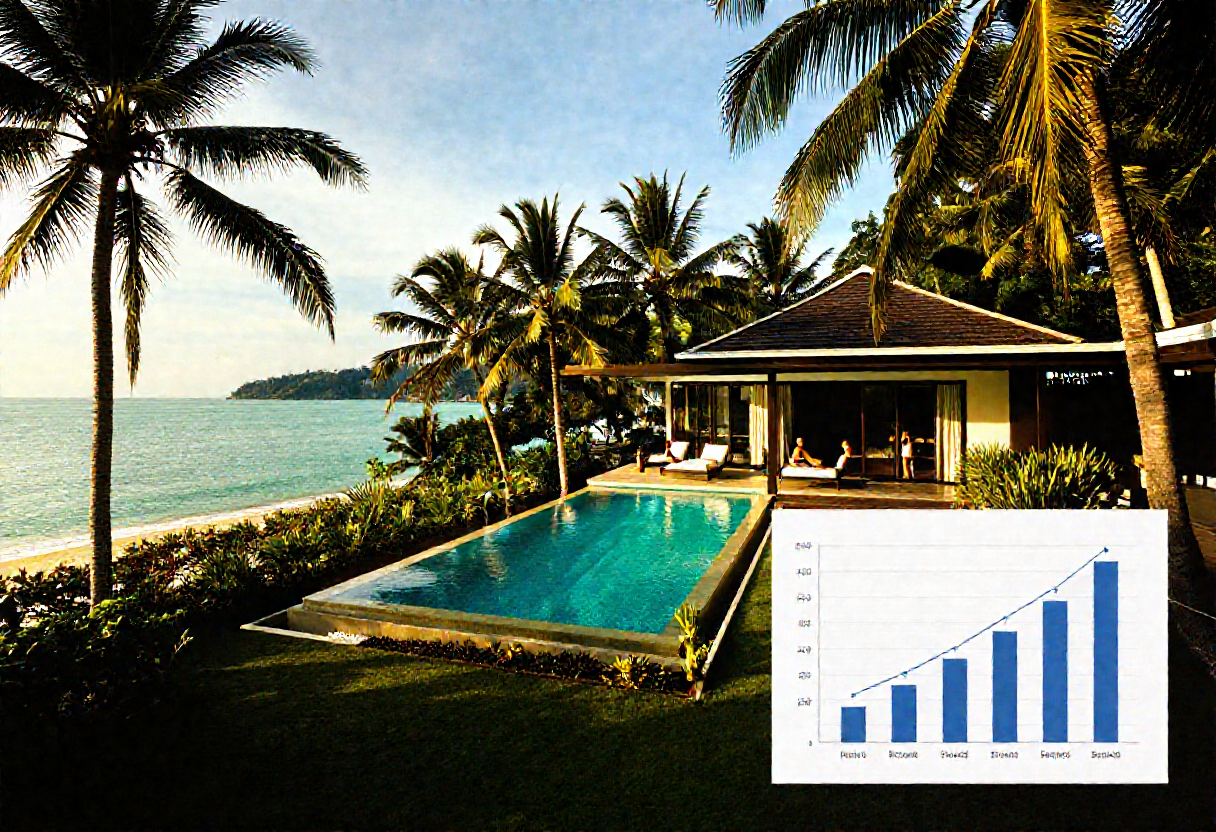
Koh Samui rental market outlook 2026 shows a robust average occupancy of 68–78% for short‑term villas and rental yields ranging from 6 % to 12 % depending on location and season. This guide breaks down the seasonal patterns, area‑specific performance, and practical steps to optimise your investment return.
1. Why the Rental Market Matters for Villa Buyers
Investors often purchase a villa for its lifestyle value, but the rental side‑step can significantly boost the overall return on investment (ROI). Understanding the nuances of the market helps you:
- Forecast cash flow during low‑season periods.
- Select the right location for higher nightly rates.
- Choose the optimal rental model – Airbnb, boutique resort partnership, or long‑term lease.
2. Seasonal Occupancy Trends
Koh Samui’s climate creates two distinct rental seasons:
| Season | Months | Typical Occupancy | Nightly Rate Range (THB) |
|---|---|---|---|
| High (Dry) | Dec – Apr | 75‑85 % | THB 6,500–12,000 (approx. $191–$353) |
| Shoulder | May – Jun, Sep – Oct | 55‑68 % | THB 4,800–9,000 (approx. $141–$265) |
| Low (Monsoon) | Jul – Aug | 40‑55 % | THB 3,200–6,500 (approx. $94–$191) |
The peak period aligns with the dry winter, attracting European and Australian tourists. The monsoon season sees a dip, but savvy owners can offset the loss with long‑term expatriate leases.
3. Area‑Specific Rental Performance
3.1 Chaweng – The High‑Yield Hub
- Average Yield: 9‑12 %.
- Typical Villa Size: 2–4 bedrooms, 250‑350 m².
- Target Guest Profile: Party‑goers, short‑stay tourists.
- Key Advantage: Highest nightly rates due to beachfront proximity and nightlife.
3.2 Bophut – Family‑Friendly Returns
- Average Yield: 7‑9 %.
- Typical Villa Size: 3–5 bedrooms, 300‑400 m².
- Target Guest Profile: Families, couples seeking quieter evenings.
- Key Advantage: Steady occupancy throughout the year, especially during school holidays.
3.3 Lamai & Maenam – Value Growth Zones
- Average Yield: 6‑8 %.
- Typical Villa Size: 2–3 bedrooms, 200‑300 m².
- Target Guest Profile: Budget‑conscious travelers, retirees on long‑term stays.
- Key Advantage: Lower purchase price gives a higher price‑to‑rent ratio.
3.4 Choeng Mon & Plai Laem – Luxury Niche
- Average Yield: 6‑7 % (lower nightly rates but higher sale price).
- Typical Villa Size: 4–6 bedrooms, 400‑600 m².
- Target Guest Profile: High‑net‑worth guests, honeymooners.
- Key Advantage: Premium branding opportunities and longer booking windows.
4. Calculating Your Expected Rental Income
Below is a simplified model for a 3‑bedroom beachfront villa in Chaweng priced at THB 30,000,000 (approx. $882,353):
| Parameter | Value |
|---|---|
| Purchase Price | THB 30,000,000 (approx. $882,353) |
| Average Nightly Rate (high season) | THB 9,000 (approx. $265) |
| Average Occupancy (annual) | 72 % (263 nights) |
| Gross Annual Rental Income | THB 2,367,000 (approx. $69,618) |
| Management Fee (15 %) | THB 355,050 (approx. $10,442) |
| Net Annual Income | THB 2,011,950 (approx. $59,176) |
| Yield (Net / Purchase) | 6.7 % |
Note: This model excludes property tax, insurance and occasional repair costs – see the disclaimer at the end of the article.
5. Maximising ROI: Rental Strategies
5.1 Dynamic Pricing Platforms
Tools like Beyond Pricing or PriceLabs adjust nightly rates in real‑time based on market demand, often boosting revenue by 5‑12 %.
5.2 Partnering with Local Property Management
A reputable manager handles guest communications, cleaning, and regulatory compliance. Expect a 12‑18 % fee, but the trade‑off is higher occupancy and reduced vacancy periods.
5.3 Diversifying Rental Models
- Short‑term (Airbnb/Booking.com): Highest per‑night profit, suitable for high‑season months.
- Medium‑term (1‑6 months): Appeals to digital nomads; provides steadier cash flow during shoulder seasons.
- Long‑term (6 months+): Ideal for expatriates; reduces turnover costs and often yields 4‑5 % net after management fees.
6. Legal & Tax Considerations
Foreign owners must register the rental activity with the Thai Revenue Department and obtain a Tourist Business License if operating more than 180 days per year. Property tax (house tax) is modest – typically 0.1 % of assessed value. Income tax on rental earnings follows a progressive scale up to 35 % for residents; non‑residents are taxed at a flat 15 % after allowable deductions.
For a deeper dive on ownership structures, see our guide on foreign ownership laws and legal structures.
7. Forecast for 2026–2027
- Demand: Expected to stay strong, with a 3‑5 % increase in international arrivals after the new direct flight routes from Europe.
- Supply: Limited new beachfront developments due to zoning restrictions, keeping price pressure on existing villas.
- Yield Outlook: High‑season yields may edge up to 13 % in Chaweng, while low‑season yields should stabilise around 5 %.
8. Quick Checklist for Investors
- Verify the chanote title deed and ensure the land is freehold.
- Confirm the building permit matches the villa’s specifications.
- Register the property with the Tourist Authority if planning short‑term rentals.
- Engage a licensed Thai property manager with proven Airbnb experience.
- Use a dynamic pricing tool to optimise nightly rates.
- Review the tax implications with a qualified accountant.
For a step‑by‑step due diligence list, visit our due diligence checklist.
This article is for informational purposes only and does not constitute legal or financial advice. Always consult a qualified Thai property lawyer before making any investment decisions.
Ready to explore a rental‑ready villa? Contact the Buy Samui Villas team to arrange a private viewing or to discuss a tailored property‑management solution.